Every Drop Counts: Why Water Is the Next Boardroom Risk — and Opportunity — for American Business
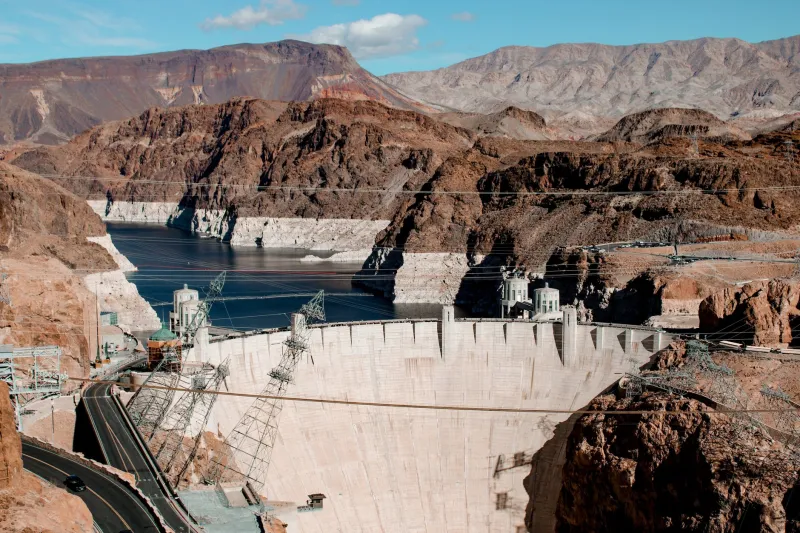
For decades, water sat quietly at the bottom of corporate risk registers — a utility expense too small to warrant a second look. That era is over. From the shrinking Colorado River to aquifer depletion beneath the High Plains, water scarcity is now reshaping where companies can operate, how much they pay, and whether regulators and customers trust their claims of responsible stewardship.
At Gren Eco Consulting, we see the same pattern repeatedly: mid-sized firms that have mapped their carbon footprint in detail often cannot answer a simple question — how much water do we actually use, and where does it come from? Closing that gap is not just risk management. Done well, it is a competitive advantage.
The Wake-Up Call Is Already Here
Consider the arithmetic. More than 40 states expect water stress within the decade, according to federal assessments. Manufacturing clusters in Arizona, semiconductor fabs in Texas, food processors in California's Central Valley — all are operating against tightening allocations and rising municipal rates. In Phoenix and parts of Colorado, new commercial connections increasingly depend on demonstrated efficiency commitments.
For a mid-sized manufacturer, a mandatory supply curtailment can idle a line for weeks. For a beverage or food company, an angry watershed community can become a reputational crisis overnight. Water risk is rarely abstract; it arrives as a permit denial, a rate spike, or a headline.
Start With the Audit: You Cannot Manage What You Have Never Measured
The first step is unglamorous but transformative: a professional water audit. Most companies discover that their utility bills reflect estimates, not measurements, and that a surprising share of usage — often 10 to 20 percent — is leakage or outdated equipment running outside business hours.
A credible audit should cover three dimensions:
- Volume and cost: Metered consumption by facility, process, and time of day, benchmarked against industry peers.
- Source and discharge: Where water is drawn from (municipal, ground, or surface) and where it leaves — the basis for any future reuse strategy.
- Watershed context: Whether your facilities sit in a water-stressed basin, using tools such as the World Resources Institute's Aqueduct mapping.
Companies frequently find that a handful of processes — cooling, cleaning, rinsing — dominate total use. That concentration is good news: targeted interventions in two or three areas can move the entire footprint.
Closed-Loop Thinking: From Single Use to Recirculation
Once the data is clear, the next tier of opportunity is recirculation. Closed-loop systems capture process water, treat it on-site, and return it to service rather than discharging it to the sewer.
The economics have shifted decisively. Membrane filtration, advanced oxidation, and modular treatment skids have fallen in cost while municipal water and wastewater rates climb steadily — often 5 to 8 percent annually in growing Sun Belt metros. For a food processor recirculating wash water, or a data center adopting closed-loop cooling, payback periods of three to five years are increasingly common, before counting avoided rate risk.
Even partial steps count. Capturing roof runoff for landscape irrigation, reusing final rinse water for initial cleaning, and installing high-efficiency fixtures are low-capital moves that typically pay back within a year.
Watershed Partnerships: The Underrated Strategy
Individual efficiency has a ceiling. The deeper opportunity lies in collective action at the basin level — the concept at the heart of formal water stewardship frameworks.
Practical examples are multiplying across the country: manufacturers in the Great Lakes region funding riparian restoration to protect shared supply, agricultural processors in Idaho cooperating on irrigation efficiency with neighboring farms, and tech companies underwriting aquifer recharge projects in Texas. These partnerships do three things that no single-facility project can:
- They secure social license. Regulators and communities treat engaged corporate citizens differently when allocations are contested.
- They mitigate shared risk. A stressed basin threatens every user; contributing to basin health is cheaper than relocating.
- They create credible stories. Watershed outcomes are verifiable in ways that vague sustainability slogans are not — and increasingly, investors and large customers expect exactly that verification.
Making the Business Case Internally
Sustainability leaders often struggle to win capital for water projects because the risks feel hypothetical. The remedy is translation. Frame water investments in the language your CFO already uses: avoided curtailment costs, hedge value against rate escalation, permit security for planned expansion, and qualification for customer supply-chain scorecards that increasingly include water metrics.
A useful exercise is stress-testing your expansion plan against a 20 percent allocation reduction. If the answer is 'we would have a serious problem,' water stewardship has just moved from the sustainability report to the strategic plan.
First Steps for the Uninitiated
If your organization has never measured a drop, begin here:
- Pull twelve months of water bills across all sites and normalize them per unit of production.
- Commission a walk-through audit at your two largest facilities.
- Map each site against water-stress data to understand true exposure.
- Fix the obvious: leaks, aging cooling towers, and after-hours consumption.
- Identify one basin-level partnership opportunity within the year.
None of this requires heroics. It requires the same discipline American businesses bring to energy, safety, and quality — applied to a resource that is rapidly becoming the scarcest input of all.
The companies that treat water as a strategic asset will expand where competitors stall, win contracts where verification matters, and earn trust in the communities where they operate. The water bill, in other words, is not the problem. Ignoring it is.