Green Building or Green Theater? How to Evaluate Whether Your Facility Retrofits Are Actually Reducing Emissions
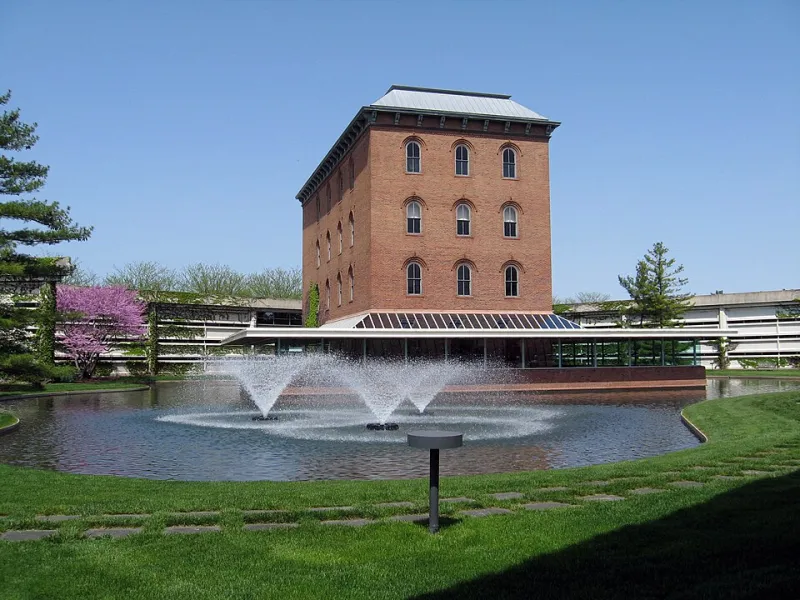
Photo: Holly Higgins, CC BY 2.0, via Wikimedia Commons
There is a particular kind of corporate announcement that arrives with renderings of sun-drenched atriums, testimonials from facilities directors, and a press release declaring a commitment to a greener future. The building has been retrofitted. LED lighting has replaced fluorescent fixtures. A rooftop solar array now graces the headquarters. LEED Silver certification has been achieved. Stakeholders are pleased.
What the press release rarely includes is a rigorous accounting of how many metric tons of CO₂ those investments actually eliminated — or whether the emissions reductions justified the capital deployed. In many cases, they do not. The result is a growing category of corporate sustainability expenditure that functions primarily as reputation management rather than genuine climate action.
This is the retrofit paradox: the projects most likely to generate favorable coverage are frequently the least likely to produce proportionate environmental benefit.
Why Retrofits Are Structurally Prone to Greenwashing
The appeal of building retrofits as a sustainability strategy is understandable. Facilities are tangible. Improvements are visible. Certifications are legible to non-technical stakeholders. And unlike supply chain decarbonization or Scope 3 emissions reduction, a building retrofit can be photographed.
But the structural incentives around facility upgrades create significant risk of metric manipulation. Most corporate sustainability teams are evaluated, at least in part, on year-over-year improvements in reported metrics. Retrofits offer an immediate opportunity to move numbers — energy intensity per square foot, for instance — without necessarily reducing absolute emissions. A company that installs high-efficiency HVAC in a single headquarters building can report a meaningful percentage reduction in facility energy use while its total organizational carbon footprint remains essentially unchanged.
Certification frameworks compound the problem. LEED, ENERGY STAR, and similar programs assess performance relative to baseline standards, not against an organization's actual climate commitments. A building can achieve LEED Gold certification while still operating at an absolute emissions level that is incompatible with a credible net-zero trajectory. The certification communicates relative efficiency. It does not validate climate alignment.
The Metrics That Get Misrepresented Most Often
Corporate communications around building retrofits tend to cluster around a predictable set of figures. Understanding how each can be legitimately inflated is essential to evaluating whether a project represents genuine progress.
Energy intensity reductions. Reporting a percentage decrease in energy use per square foot is standard practice, but it obscures absolute consumption. If a company expands its footprint while improving intensity, total energy demand — and associated emissions — may increase even as the headline metric improves.
Percentage of electricity from renewables. Rooftop solar installations frequently cover only a fraction of a facility's total consumption. A building that generates 15 percent of its electricity on-site and purchases the remainder from a carbon-intensive grid has not achieved meaningful decarbonization, even if the solar installation is prominently featured in sustainability communications.
Carbon offsets embedded in retrofit ROI calculations. Some organizations bundle offset purchases with physical retrofit projects to inflate reported emissions reductions. The offset may be legitimate, but it is doing work that the physical infrastructure is not. These should be reported separately and evaluated against their own quality standards.
Avoided emissions projections. Forward-looking claims about emissions that will be avoided over the lifetime of a retrofit can be constructed to support almost any conclusion, depending on the assumed grid emissions factor, discount rate, and useful life of the equipment. These projections deserve the same scrutiny applied to financial forecasts.
A Framework for Calculating True Retrofit ROI
A rigorous evaluation of any proposed building retrofit should address three distinct dimensions: absolute emissions impact, financial return, and strategic alignment with the organization's declared climate commitments.
Absolute emissions impact requires measuring the project's effect on total organizational greenhouse gas emissions, not just facility-level intensity metrics. The relevant question is not whether this building will become more efficient, but whether this investment is the highest-leverage use of capital available for decarbonization. In many cases, demand-side interventions — operational changes, occupancy optimization, or procurement of grid-scale renewable energy through a power purchase agreement — will reduce more emissions per dollar invested than physical retrofits.
Financial return should be calculated using a consistent methodology that accounts for the full cost of capital, maintenance obligations over the project's useful life, and realistic assumptions about utility rate trajectories. Projects that appear cost-effective under optimistic energy price assumptions may not survive sensitivity analysis. Organizations should require that any retrofit proposal include a scenario in which energy costs remain flat or decline.
Strategic alignment asks whether the project contributes meaningfully to the organization's stated climate trajectory. If your company has committed to science-based targets, each major capital investment in sustainability should be evaluated against whether it keeps the organization on the required emissions reduction pathway — not merely whether it improves upon the prior year's baseline.
Distinguishing Genuine Impact from Perception Management
Not every retrofit is greenwashing. Many organizations undertake building improvements that produce real, measurable, and proportionate emissions reductions. The distinction lies in how the decision was made and how results are reported.
Genuine impact projects begin with an emissions reduction target and work backward to identify the interventions most likely to achieve it. They are evaluated against absolute emissions metrics, not relative efficiency improvements. Their results are reported with full transparency about methodology, including assumptions, limitations, and what the project did not accomplish.
Perception management projects begin with a communications objective — a certification to achieve, a headline metric to improve, a visible symbol of commitment — and work backward to justify the capital expenditure. They are reported using the metrics most favorable to the narrative, without acknowledging the gap between reported improvements and actual climate impact.
The practical test is straightforward: ask your facilities and sustainability teams to present any proposed retrofit alongside an alternative scenario in which the same capital is deployed elsewhere — in supply chain decarbonization, in renewable energy procurement, or in operational efficiency programs. If the building project cannot demonstrate superior emissions impact per dollar invested, the decision to proceed should be made transparently, with an honest acknowledgment that other factors — occupant comfort, asset value, regulatory compliance — are driving the investment.
There is nothing inherently wrong with improving your facilities for reasons beyond carbon reduction. The problem arises when those improvements are represented to stakeholders as climate action when they are, in material respects, something else.
Building an Internal Standard That Holds
Organizations serious about avoiding retrofit greenwashing should establish an internal review standard that requires any facility investment above a defined threshold to demonstrate absolute emissions impact, not just relative improvement. That standard should be applied consistently across all properties, not selectively to projects already favored for other reasons.
External verification adds credibility. Engaging a qualified third party to review retrofit impact claims — using the same rigor applied to financial audits — signals to investors, regulators, and employees that the organization's sustainability commitments are subject to genuine accountability.
The built environment represents a meaningful share of corporate emissions for many U.S. companies. Addressing it thoughtfully, with honest metrics and rigorous investment standards, is entirely achievable. What is not acceptable — and increasingly, not defensible — is treating the appearance of progress as a substitute for the real thing.