The Last Mile, The Loudest Message: Rethinking the Emissions Hiding in Your Company Vehicles
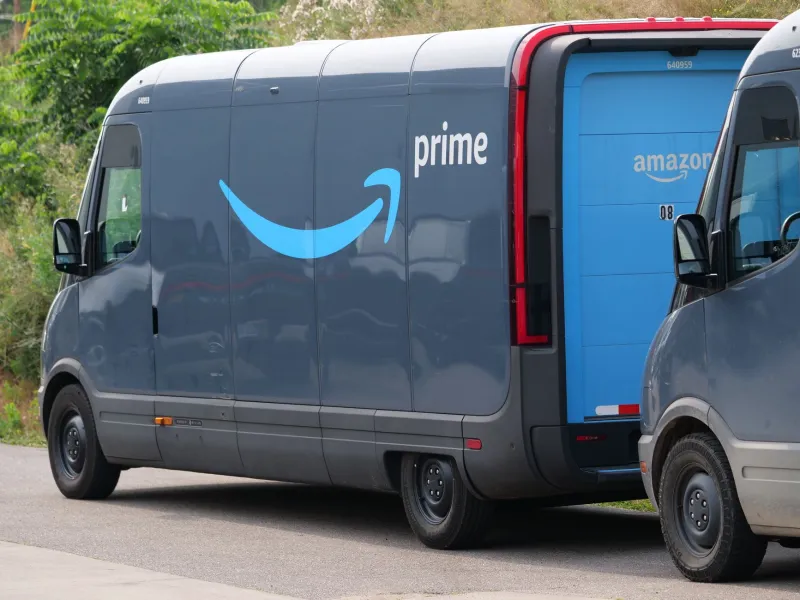
Ask most mid-sized American companies where their emissions come from, and you'll hear about buildings, energy contracts, maybe air travel. Rarely does anyone mention the white vans in the loading dock, the sales team's highway mileage, or the box trucks making last-mile runs across three counties. Yet for many businesses, the vehicle fleet is the single largest and most publicly visible slice of their carbon footprint — rolling billboards that either reinforce or quietly contradict everything the sustainability report claims.
The Fleet Is Your Brand on Wheels
A branded van idling at a curb is a small thing. A fleet of them, logged at 40,000 miles a year each on gasoline, is a statement. Customers notice. Employees notice. Increasingly, so do procurement officers at the large corporate clients who now ask suppliers for fleet emissions data as part of Scope 3 accounting.
This is what makes fleet emissions uniquely risky. Unlike a data center's power draw or a factory's boiler, vehicles operate in public. A company that trumpets recycled packaging while running a diesel-heavy delivery operation invites exactly the kind of scrutiny that turns a sustainability program into a liability.
Start With the Math, Not the Marketing
The instinct to buy electric vans because it 'looks right' is understandable but backwards. The first step is a cold-eyed audit: fuel logs, route data, vehicle age, maintenance records, and duty cycles. From there, calculate total cost of ownership (TCO) — not sticker price.
Electric vehicles carry a higher upfront cost, but federal incentives under the Inflation Reduction Act, state-level programs like California's HVIP vouchers, and dramatically lower per-mile fuel and maintenance costs frequently flip the equation. A van driven 25,000 miles annually in stop-and-go urban routes — where electric powertrains shine — may reach TCO parity with gasoline within three to four years. A rural route with sparse charging and long distances may not. The audit tells you which is which.
A Phased Roadmap That Actually Works
Electrification succeeds when it's sequenced, not rushed. We recommend a three-phase approach for mid-sized operators:
Phase one: right-size before you electrify. Many fleets carry vehicles that are too large, underused, or redundant. Route optimization software and telematics often cut mileage 10–20% before a single EV is purchased — savings that fund the transition itself.
Phase two: pilot on predictable routes. Start with vehicles that return to a depot nightly and run fixed urban routes. These are the easiest to charge, the simplest to measure, and the lowest-risk proving ground for drivers and maintenance staff alike.
Phase three: scale with infrastructure in mind. Charging is the real bottleneck, not the vehicles. Depot electrification may require utility coordination, panel upgrades, and in some cases 12–18 months of lead time with your local utility. Build that timeline into your plan early, or it will become your plan's undoing.
Communicate Without Greenwashing
Progress in fleet decarbonization is genuinely communicable — if you're precise. Say 'we converted 40% of our urban delivery fleet to electric, cutting fleet emissions an estimated 22%,' not 'we're going green.' Regulators, from the FTC with its Green Guides to state attorneys general, are increasingly aggressive about vague environmental claims. Specific, verified, time-bound statements are both safer and more persuasive.
The companies that win this transition won't be the ones with the flashiest press release. They'll be the ones whose vans — quietly, mile by mile — match the story they tell.