First Impressions Are Carbon Impressions: Auditing the Sustainability Customers Can See
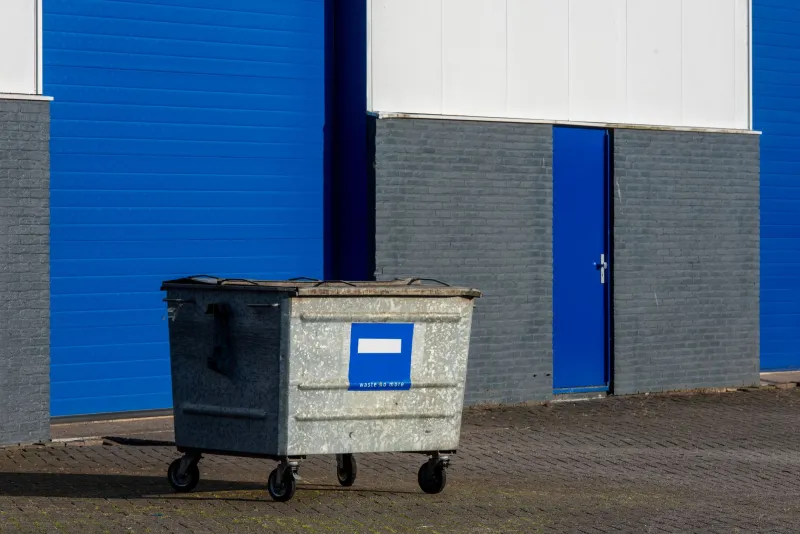
There is a moment that plays out in parking lots across America every business day. A customer steps out of their car, notices the overflowing trash bin beside a recycling receptacle that hasn't been emptied in weeks, walks past a fleet van idling at the curb, and enters a lobby where a tasteful sign proclaims the company's commitment to net zero by 2040.
No spreadsheet in your annual sustainability report can undo what that customer just concluded.
At Gren Eco Consulting, we work with mid-sized companies across the country on climate strategy, emissions accounting, and supply chain transparency. And we have noticed a persistent blind spot: organizations invest heavily in the documents of sustainability — the reports, the pledges, the website pages — while neglecting the physical evidence that stakeholders encounter without ever downloading a PDF. We call this the walkable sustainability footprint, and ignoring it is one of the fastest ways to erode hard-won credibility.
The Credibility Gap Lives in Plain Sight
The math of perception is unforgiving. Your meticulously researched Scope 3 analysis might reach a few hundred people this year. Your parking lot, packaging, and delivery trucks reach thousands — including the very employees whose buy-in your sustainability program depends on.
This is not an argument against rigorous reporting. Formal disclosures matter, particularly as regulatory scrutiny of environmental claims intensifies. It is an argument about sequencing and coherence. When the tangible experience of interacting with your business contradicts your stated commitments, audiences do not assume the signage is wrong. They assume the company is.
Consider the mid-sized distributor that celebrated its renewable energy procurement in a press release while its warehouse floodlights blazed at 2 p.m. on a sunny afternoon. Or the consumer brand that tout compostable packaging that no municipal program in its core markets actually accepts. In both cases, leadership was genuinely surprised by the criticism. They shouldn't have been. The signals were walkable, visible, and free to observe.
What Counts as Walkable Sustainability
The walkable footprint encompasses every touchpoint a stakeholder can experience with their own senses, typically without any effort at all. In our audits, we group these into five domains:
Facilities and grounds. Landscaping choices, lighting behavior, visible waste handling, bike infrastructure, EV charging availability, and the general condition of the physical plant. A cracked, oil-stained asphalt lot dotted with dead landscaping sends a message before anyone reads a word.
Fleet and logistics. Vehicles are rolling billboards. An idling diesel van wrapped in your logo and an eco-slogan is a rolling contradiction.
Packaging and product experience. What customers hold in their hands. Is the 'recyclable' claim actually recyclable in their ZIP code? Does the box contain four times the necessary volume?
Frontline communication. What your receptionist, cashiers, and delivery drivers say when asked about your environmental practices. If they shrug, your internal communications have a gap that no report can fill.
Signage and claims. Every assertion posted on a wall or printed on a receipt is a promise that must withstand scrutiny — increasingly, legal scrutiny.
A Practical Audit Framework
Closing the gap does not require a consulting engagement the size of your marketing budget. It requires disciplined observation. We recommend a four-step process:
1. Walk the stakeholder path. Literally. Start in the parking lot or at the loading dock and follow the route a customer, employee, or neighbor takes. Photograph everything that makes a claim or contradicts one. Do this at multiple sites and at different times of day — the 2 a.m. lighting behavior is often more revealing than the noon version.
2. Inventory the claims. List every environmental statement visible on your property, products, vehicles, and materials. Then verify each one. 'Recyclable' where? 'Energy efficient' compared to what? Claims that cannot survive a skeptical customer's two-minute fact-check are liabilities, particularly under the FTC's Green Guides.
3. Rank by visibility and dissonance. Some gaps are cosmetic; others are corrosive. An overflowing bin is a maintenance issue. A fleet of idling vehicles beneath an environmental banner is a narrative problem. Prioritize fixes where high visibility and high dissonance intersect.
4. Close the loop internally. The employees who witness your facilities daily are your most credible — or most skeptical — ambassadors. Share what you found, what you're fixing, and on what timeline. Nothing builds internal trust faster than leadership acknowledging an obvious problem before employees have to point it out.
Alignment Beats Perfection
Here is the encouraging part: walkable sustainability does not demand flawlessness. Stakeholders are remarkably forgiving of imperfection and remarkably unforgiving of pretense. A company that posts an honest sign — 'We're transitioning our fleet to electric beginning in 2026; here's why' — outperforms one that claims a green identity it cannot demonstrate.
The most effective mid-sized companies we work with treat their physical environment as their primary sustainability communication channel and their formal reporting as the supporting documentation, not the other way around. They understand that the report is read once; the parking lot is read every day.
Your next stakeholder impression is not waiting in a PDF. It is idling in your parking lot right now, engine running, waiting for someone to notice. The only question is whether they will see what you intended — or what you forgot to manage.