From Waste Line to Bottom Line: How Mid-Sized U.S. Manufacturers Are Profiting From the Circular Economy
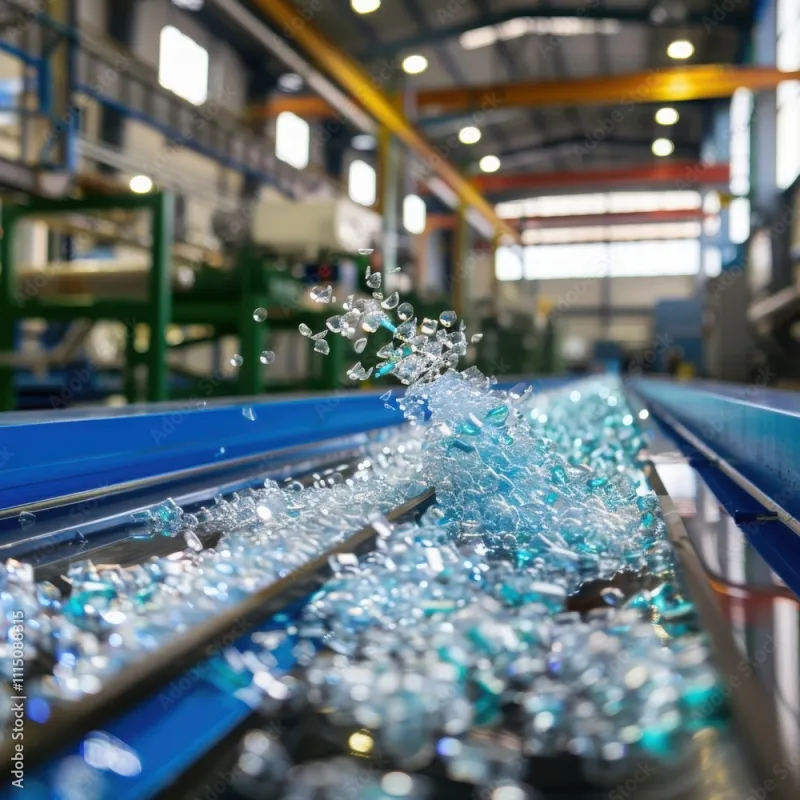
Photo: manufacturing facility circular economy material recovery industrial production USA, via as2.ftcdn.net
For decades, American manufacturers have treated waste as an unavoidable cost of doing business — a byproduct to be managed, disposed of, and largely forgotten. That assumption is now being dismantled, facility by facility, across the U.S. industrial landscape. A new generation of mid-sized manufacturers is not simply reducing waste; they are systematically redesigning their operations to eliminate the concept of waste altogether, converting discarded materials into new revenue, and building supply chains that are simultaneously leaner and more resilient.
This is the circular economy in practice — not as a sustainability talking point, but as a measurable business strategy with returns that belong in a CFO's quarterly presentation.
Why the Linear Model Is Becoming a Liability
The traditional take-make-dispose production model carries hidden costs that rarely appear on a single line item. Raw material price volatility, rising landfill tipping fees, increasingly stringent state-level waste disposal regulations, and growing customer scrutiny of environmental performance are collectively eroding the financial logic of linear manufacturing.
According to the Ellen MacArthur Foundation, transitioning to circular economy models could generate $4.5 trillion in economic value globally by 2030. For U.S. manufacturers specifically, the opportunity is immediate and concrete. Companies that have redesigned production systems to recover and reuse materials report reductions in raw material costs ranging from 10 to 30 percent, depending on the sector and the sophistication of their recovery infrastructure.
The question is no longer whether circular strategies deliver financial value. The question is why more manufacturers have not yet made the shift.
Redesigning the Production System, Not Just the Recycling Bin
The most common misconception about circular economy implementation is that it begins and ends with recycling programs. In reality, meaningful circularity requires rethinking the production system at its source — the design stage.
Consider the approach taken by several mid-sized metal fabricators in the Midwest who have restructured their cutting and stamping operations around what the industry calls "design for disassembly." By standardizing component geometries and reducing the variety of alloys used in a single product line, these manufacturers have dramatically increased the recoverability of scrap metal. Rather than selling mixed-alloy scrap at commodity rates to third-party processors, they are now returning clean, segregated scrap back into their own production process — effectively closing the material loop internally.
The financial impact is direct. One Ohio-based fabricator reported a 22 percent reduction in aluminum input costs over 18 months after implementing an in-house scrap recovery and remelting program. The capital investment in segregation equipment and a small induction furnace paid back in under two years.
Monetizing the Residual: Turning Byproducts Into Revenue Lines
For manufacturers whose production processes generate organic or chemical byproducts, the circular opportunity extends beyond material recovery into entirely new business relationships.
A mid-sized food processing company in the Central Valley of California — a region where agricultural waste management is both a regulatory and operational challenge — provides an instructive example. The company historically paid to haul away fruit pomace, the pulpy residue remaining after juice extraction. After conducting a material flow audit (a foundational step in any serious circular economy engagement), the company identified that its pomace contained sufficient pectin and dietary fiber concentrations to attract buyers in the nutraceutical and food ingredient sectors.
Within 18 months of establishing supply agreements with two ingredient brokers, the company had converted a disposal cost of approximately $180,000 annually into a byproduct revenue stream generating $240,000 per year — a net swing of $420,000 on a single waste stream. Critically, the operational changes required were modest: improved sorting at the processing line and basic moisture reduction equipment.
This pattern — where a material flow audit reveals that what is being discarded carries genuine market value — repeats itself across sectors from wood products manufacturing to pharmaceutical production to textile finishing.
The Role of Industrial Symbiosis
Some of the most financially compelling circular economy outcomes emerge not from a single company's internal redesign, but from coordinated material exchanges between neighboring businesses — a concept known as industrial symbiosis.
The Kalundborg Symbiosis in Denmark is the most frequently cited international example, but analogous networks are developing across U.S. industrial corridors. In the Research Triangle region of North Carolina, a cluster of manufacturing and logistics companies has established a formalized material exchange program facilitated by a regional economic development organization. Steam, process heat, packaging materials, and organic residuals circulate among participants in ways that reduce both input costs and disposal expenses for every party involved.
For mid-sized manufacturers, industrial symbiosis offers an entry point into circular economy value that does not require large capital investment. The primary requirements are geographic proximity to complementary businesses, a willingness to share production data, and a coordinating intermediary — a role that sustainability consultants are increasingly well-positioned to fill.
What CFOs Need to See
Sustainability teams often struggle to secure executive buy-in for circular economy initiatives because the financial case is not presented in language that resonates with finance leadership. At Gren Eco Consulting, we consistently advise clients to lead with three metrics when building the internal business case: input cost reduction, disposal cost avoidance, and new revenue from recovered materials.
These three figures, modeled conservatively and supported by a material flow audit, create a financial narrative that stands independent of sustainability branding. When a CFO sees that a proposed circular redesign carries a 26-month payback period and reduces exposure to aluminum price volatility, the conversation shifts from environmental obligation to operational strategy.
That shift in framing is, ultimately, what makes circular economy initiatives durable. Programs anchored solely to environmental values are vulnerable to budget pressure. Programs anchored to margin improvement are not.
Getting Started: The Material Flow Audit
For manufacturers who have not yet mapped their waste streams with financial precision, the material flow audit is the essential first step. This process quantifies, by material type and volume, every input that does not exit the facility as finished product — and assigns both a disposal cost and a potential recovery value to each stream.
The audit frequently surfaces surprises. Companies discover that materials they assumed had no market value are actively sought by processors or adjacent industries. They find that small changes to sorting or segregation practices can dramatically increase the quality — and therefore the value — of recoverable materials.
The circular economy is not a distant ideal. For U.S. manufacturers willing to examine their operations with fresh eyes, it is a near-term source of competitive advantage that is already being captured by their peers.